How to efficiently assess credibility of simulation-driven medical device regulatory submission
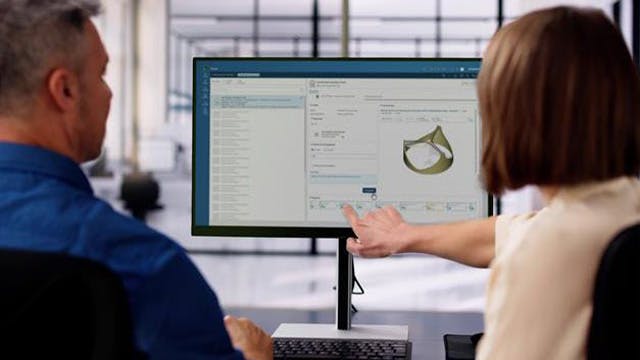
The medical device industry has entered the digital age, providing clear value across numerous areas. Concurrently, the utilization of digital tools generates an enormous amount of data with significant potential. One key area is the development of digital evidence based on computer modeling and simulation, which is currently a top priority for the FDA. There is a clear push from the FDA to build this digital evidence to ensure the credibility, safety and effectiveness of computer modeling and simulation, with the vision of eliminating testing on animals, bench models and clinical trials.
How do you transform simulation results into regulatory-grade digital evidence?
And this is where the FDA adopted standard VVUQ 40 (Verification, Validation and Uncertainty Quantification; 40 refers to medical device) rules. This nine-step framework is a risk-based approach analyzing how much a computational model will influence the decision for safety and effectiveness and it’s consequence in the loop of MD (medical device) development.
The VVUQ 40 has become an integral part of the recently published FDA guidance for assessing the credibility of computational modelling and simulation in medical device submissions. This new approach has been well received and is seeing increasing adoption among the market players. However, given the nascent stage of this market, customers are looking for new solutions to automate simulation-driven FDA submissions to accelerate the process and eliminate manual work.
What are the key elements to build a superior simulation process and data management architecture to maximize the regulatory submission efficiency and gain clear competition advantage? How automizing this process can result into cost reduction and shorten time-to-market?
Watch the on-demand webinar hosted by Mark Carlson to find out the answer.
Watch the webinar to learn:
- How to manage data together with the model, dependencies and the traceability and what is the most efficient structure
- The automated step-by-step process illustrated on a heart valve submission example
- How to create required reports and documentation
Poznaj naszych ekspertów
Mark Carlson
Sr. Principal Technical Consultant - Lifesciences Simulation & AI

Biplob Dutta
Solution Architect – AI/SPDM